Service Navigation
Search
Switzerland: Home to the World’s Longest Ozone Record
Switzerland holds a unique place in atmospheric science as the site of the longest continuous record of total ozone measurements worldwide. This historic time series began in Arosa in 1926, driven by the need to understand the influence of solar ultraviolet radiation on human health and climate.
The pioneering work was initiated by Paul Götz, who founded the Lichtklimatisches Observatorium (LKO) and equipped it with a Fabry - Buisson spectrophotometer.

Soon after, he partnered with Gordon M.B. Dobson of Oxford, making Arosa one of the first global stations to use Dobson spectrophotometers - technology that became the backbone of systematic ozone monitoring worldwide.

Over the decades, the program expanded: additional Dobson instruments were installed, Umkehr profile measurements were introduced, and in 1988 Brewer spectrophotometers further improved accuracy and data redundancy. Originally run jointly by ETH Zürich and MeteoSwiss, the program was fully taken over by MeteoSwiss in 1988, which modernized the operations by its automatization, while carefully preserving the original measurement principles to ensure a homogeneous record dating back to 1926.

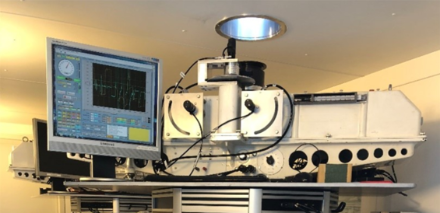
Between 2011 and 2019, the program was gradually relocated from Arosa to the Physikalisch-Meteorologisches Observatorium Davos/World Radiation Center (PMOD/WRC). This move—only 13 km away and 260 m higher—was accompanied by extensive intercomparisons and calibrations, proving that site changes did not compromise the integrity of the nearly century-long dataset.

Additional homogenization work is ongoing within the Swiss National Foundation STOA project to further refine long-term consistency for the detection of long-term trends of the recovery of the ozone layer above Switzerland.
Today, the ozone series is maintained by three automated Dobson instruments and three Brewer spectrophotometers, operated jointly by MeteoSwiss and PMOD/WRC. This high-quality dataset continues to play a crucial role in assessing ozone recovery, monitoring atmospheric change, and guiding global environmental policy.
Saturday 25.07.2026
Scientific Symposium
Location: Seminar room of PMOD
| 10:30 -11:00 | Registration and coffee | |
| 11:00 -12:30 | Tour of the facilities | Julian, Luca, Franz, Rolf, Eliane |
| 12:30 -13:45 | Lunch | |
| 14:00 -15:45 | Science block 1 | |
| 14:00 -14:15 | Welcome by PMOD | Louise Harra |
| 14:15 -14:45 | Keynote 30’ | Matt Tully, BOM, Victoria, Australia |
| 14:45 | 3 presentations of 20’ | Irina Petropavlovskikh, NOAA, Boulder, USA |
| 15:05 | Mark Weber, Bremen Univ, Germany | |
| 15:25 | Neil Harris, Cranfield Univ, UK | |
| 15:45 -16:15 | Coffee Break | |
| 16:15 -17:45 | Science block 2 | |
| 16:15 -16:45 | Keynote 30’ | Wolfgang Steinbrecht, DWD, Germany |
| 16:45 | 3 presentations of 20’ | Fernanda Cabello, PMOD/WRC, CH |
| 17:05 | Louis Mirallié, MeteoSwiss, CH | |
| 17:25 | tbd | |
| 17:45 -18:15 | Suppl: Short Dobson and Brewer tour | on demand |
Participation in the symposium is by invitation only. If you are interested in participating but have not been invited, please contact us at 100year.o3eventatmeteoswiss.ch.
Public Event (in German)
Location: Seminar room of PMOD
| 18:45 | Türöffnung | |
|---|---|---|
| 19.00 - 19.15 | Willkommen bei MeteoSchweiz | Direktor MeteoSchweiz |
| 19:15 – 20:15 | Geschichte und Bedeutung der weltweit längsten Ozonmessreihe | tbd |
| 20:15 – 21:15 | Apéro |
The 100 year-anniversary event is hosted at PMOW/WRC in Davos, Switzerland

Link to hotels
Contact
For any questions regarding the event, including logistics or participation, please contact us at